The Four Pillars of Soundproofing
Effective noise control is never achieved through a single magic material. The psychological relief of a truly quiet space is engineered through the strategic combination of four architectural principles. When applied correctly, these tactics stop sound transmission at the structural level.
1. Decoupling
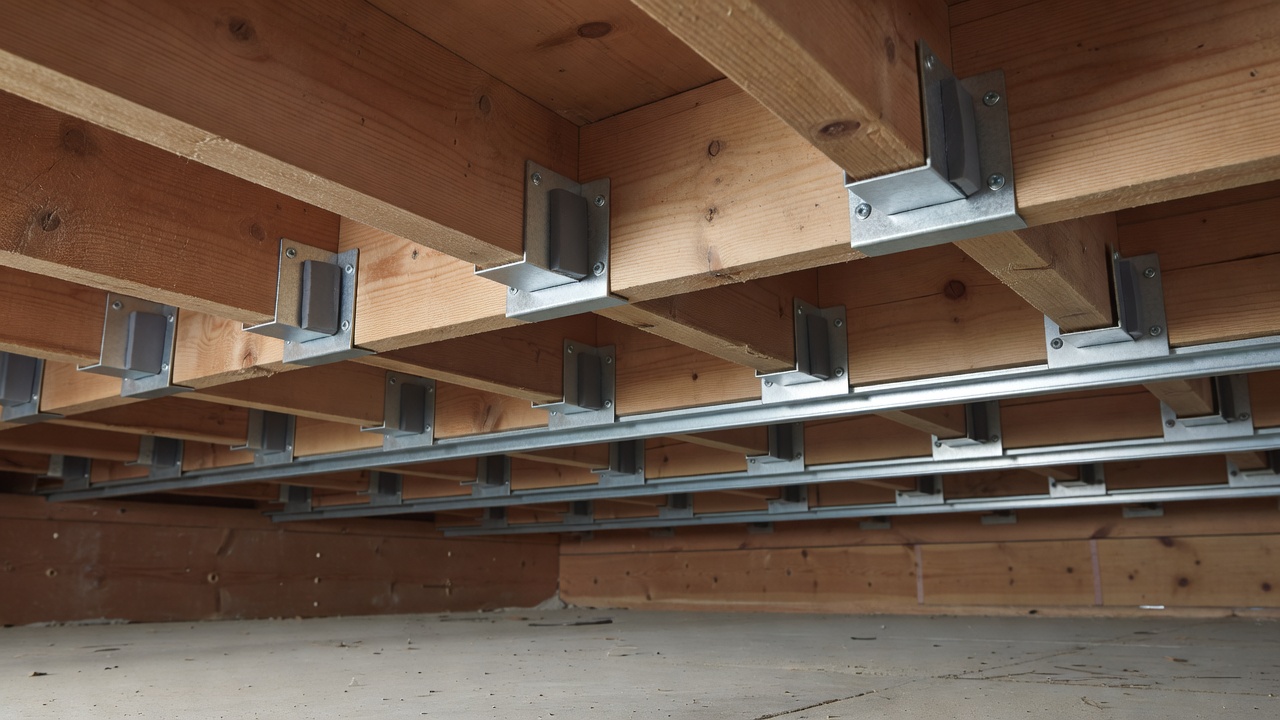
Because sound travels most efficiently through rigid connections, decoupling involves mechanically separating the two sides of a wall or ceiling. This forces the sound waves to travel through air or resilient materials, where they rapidly lose energy. Techniques include staggered stud walls, double stud walls, and the installation of resilient channels or sound isolation clips. A decoupled room operates as a "room within a room," protecting the occupant's mental well-being from external structural impacts.
2. Mass
Heavier materials are harder to move. A thick, dense wall will not vibrate as easily when struck by airborne sound waves. Adding mass is often the first step in retrofitting a space. This is typically achieved by installing additional layers of 5/8" Type X drywall. However, mass operates on a logarithmic scale; simply doubling the mass only yields a marginal increase in sound isolation (roughly 6 dB). It must be paired with other tactics for significant results.
3. Damping
Damping dissipates kinetic vibration energy by converting it into trace amounts of heat. In acoustic construction, this is accomplished using visco-elastic damping compounds, such as Green Glue. When sandwiched between two rigid layers (like two sheets of drywall), the damping compound shears as the wall vibrates, effectively killing the resonance. It is particularly crucial for controlling the low-frequency rumble of home theaters or heavy traffic.
4. Absorption
Not to be confused with blocking, absorption relies on porous materials to trap sound waves within a cavity. Installing mineral wool or fiberglass insulation between wall studs prevents the hollow wall cavity from acting like a drum. While insulation alone will not stop a neighbor's loud music, it is a necessary component of a larger decoupled system, capturing the resonant frequencies that leak into the structural voids.
Prioritizing these methods transforms a residence from a stressful, reactive environment into a calm, proactive sanctuary. True wellness begins with the boundaries we set, and acoustic boundaries are among the most vital.