The Catalog of Quiet
Knowing what goes into a soundproofed wall is as vital as understanding how it is built. Relying on misinformation—such as attempting to block sound with lightweight egg-crate foam—only prolongs domestic stress. Here is a definitive look at the materials required to cultivate a truly serene environment.
Acoustic Mass: Why Heavy Materials Block Low Frequencies
Physics dictates that lower frequency waves contain higher energy. Subwoofers, heavy machinery, and dense city traffic emit long waves that easily push past standard walls. Adding extreme mass is a requirement for arresting this energy. Heavy materials resist the wave's attempt to vibrate the structure, essentially reflecting the sound back to its source rather than allowing it to pass through.
| Material | Primary Function | Typical Application |
|---|---|---|
| Mass Loaded Vinyl (MLV) | Mass / Limp blocking | Floors, walls, over joists. Exceptional for adding mass without excessive thickness. |
| 5/8" Type X Drywall | Rigid Mass | The standard heavy board used in double-layer wall assemblies. |
| Damping Compounds | Vibration Damping | Applied between two sheets of drywall to convert kinetic sound energy into heat. |
| Mineral Wool Insulation | Cavity Absorption | Placed between studs to stop resonance in hollow cavities. |
| Resilient Isolation Clips | Decoupling | Attached to studs to hold furring channels, isolating the drywall from the framing. |
Mass Loaded Vinyl (MLV)
MLV is a dense, flexible material composed of vinyl and a high-mass element like barium sulfate. Being both heavy and limp, it does not resonate well, making it highly effective at blocking airborne noise across a wide frequency spectrum. It is often draped over framing before drywall is hung or laid under flooring to mitigate airborne transmission from below.
Acoustic Sealants
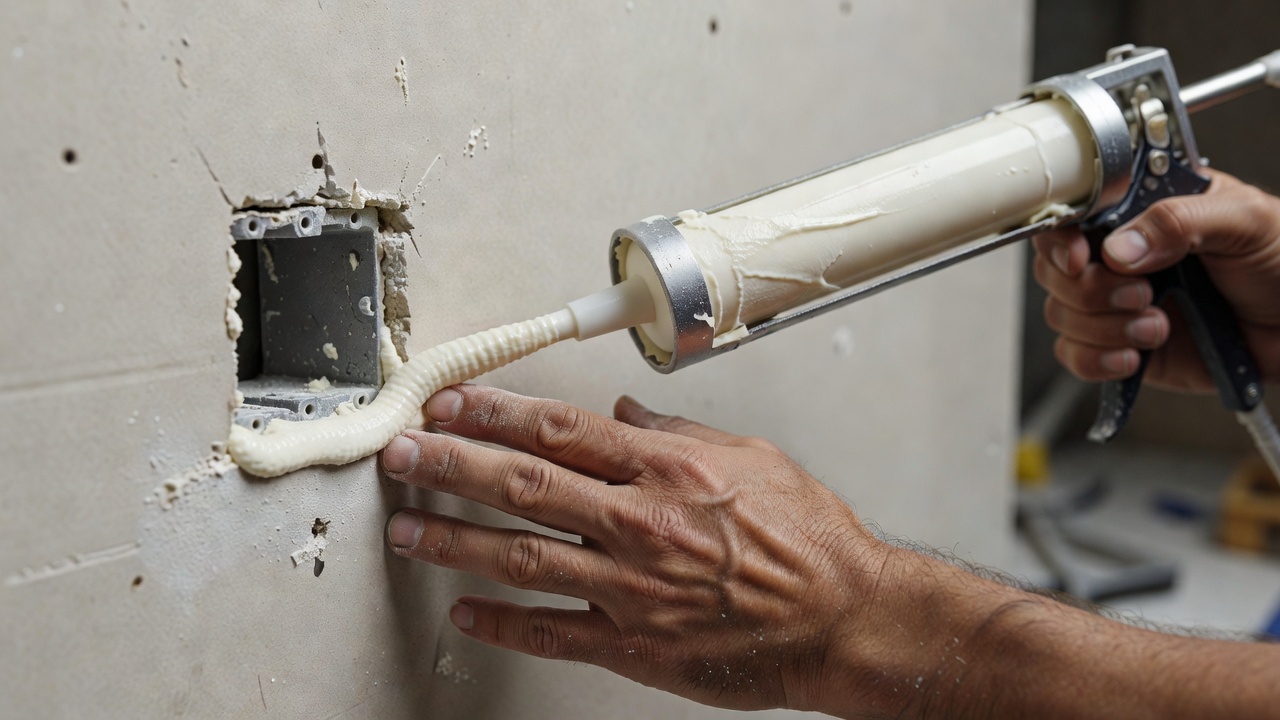
Often overlooked, the integrity of a soundproofed room relies heavily on airtightness. Even a 1% gap in a wall's surface can degrade its acoustic isolation by up to 50%. Specialized acoustical sealants remain permanently flexible, ensuring that gaps around perimeters, electrical boxes, and pipe penetrations do not crack and leak sound over time.